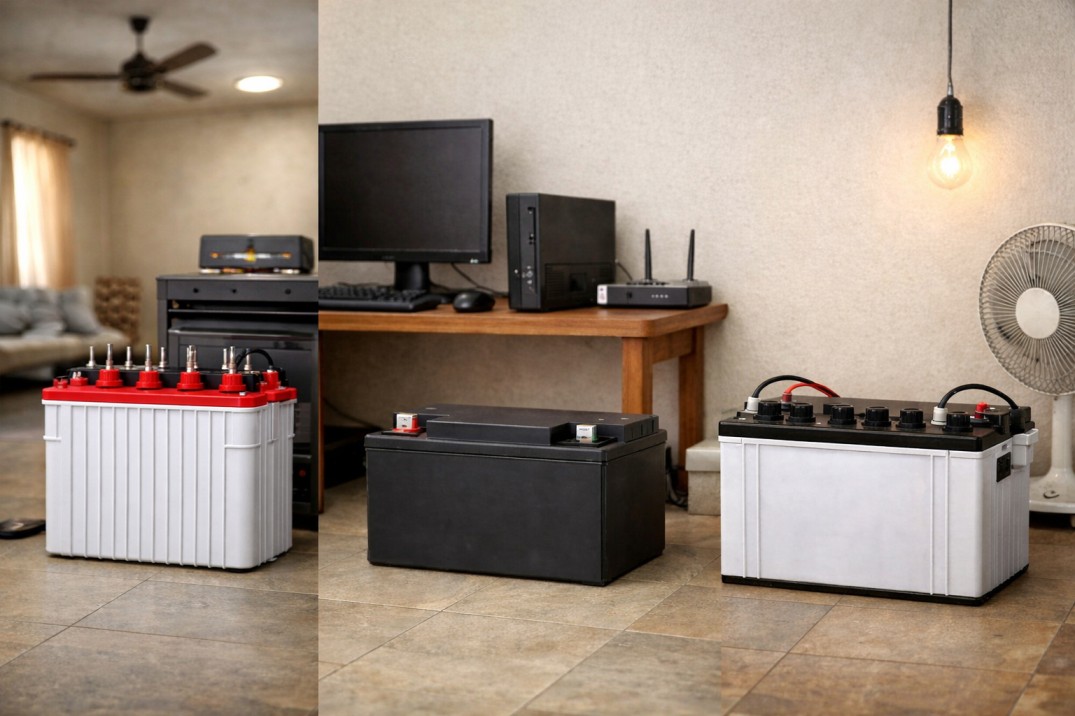
Inverter batteries are often purchased in a hurry, usually after experiencing regular power cuts. Unfortunately, that rush leads many people to buy the wrong battery type. The result? Short backup hours, early failure, or repeated replacement costs. This happens not because batteries are bad, but because buyers are rarely given an explanation of the types of inverter batteries in a practical, real-world way.
As one of the established battery manufacturers in UP, Sarex Batteries works closely with dealers and end users who face exactly these problems. Understanding how each battery type behaves under Indian power conditions changes everything.
Why Battery Type Matters More Than Brand Names
Every inverter battery looks similar from the outside. Internally, however, the plate structure, electrolyte flow, and discharge tolerance differ completely. These internal differences determine how long your backup lasts and how many years the battery survives.
Experienced battery manufacturers do not push a single solution. Instead, they evaluate how often power cuts occur, how heavy the load is, and how stable the charging supply remains.
In this blog, let us understand the different types of inverter batteries.
Tubular Battery in India: Preferred by Battery Manufacturers in UP
A tubular battery is designed around a strong tubular plate structure. Lead oxide is locked inside tubular gauntlets, which prevent active material from falling off during deep discharge. This detail alone dramatically increases battery life.
In practical use, tubular batteries handle long and frequent outages without losing efficiency. They recharge evenly, tolerate heat well, and maintain backup capacity for years. That is why tubular batteries dominate homes, shops, and offices facing daily power cuts.
Most premium battery manufacturers consider tubular batteries the safest long-term investment for Indian conditions, especially where voltage fluctuations are common. Leading inverter battery suppliers in UP recommend tubular batteries for heavy daily outages.
VRLA Battery Explained by Battery Manufacturers in UP
A VRLA battery works very differently. It is fully sealed and uses internal gas recombination technology. It comes with many benefits, including no water loss and no acid leakage.
This makes VRLA inverter batteries ideal for indoor environments where cleanliness matters, such as offices, hospitals, and server rooms. They also deliver stable voltage, which protects sensitive electronics.
However, VRLA batteries do not like deep discharge. When used for long backup hours repeatedly, their lifespan is reduced. This is why responsible Sarex recommends VRLA batteries only for controlled, short-duration backup needs.
Flat-Plate Battery: Simple and Budget-Focused
Flat plate batteries consist of flat lead plates surrounded by a liquid electrolyte. Although flat plate batteries are fairly inexpensive to produce and manufacture, their design does not include any safety features for use under excessive loads.
Flat plate batteries provide adequate performance in applications with infrequent and brief periods of downtime due to power outages. However, frequent deep discharges damage plate material quickly. Over time, replacement costs offset the initial savings.
Choosing the Right Inverter Battery
No single battery fits everyone. The right choice depends on how often power fails, how long backup is needed, and where the battery will operate. That is why technical guidance matters more than discounts. Over 70% of Indian households facing frequent power cuts prefer tubular batteries for long-term reliability.
Conclusion
Choosing between tubular, VRLA, and flat-plate batteries becomes simple once their purpose is clear. Tubular batteries offer endurance, VRLA batteries provide convenience, and flat-plate batteries suit light usage. With guidance from experienced battery manufacturers in UP, buyers avoid costly mistakes and secure dependable power backup.
If you are looking for a high-quality inverter, look at our Sarex battery products.
FAQs
Q1. Which inverter battery lasts the longest?
Tubular batteries last the longest during frequent power cuts.
Q2. Why do battery manufacturers prefer tubular designs?
They handle heat, fluctuations, and deep discharges efficiently.
Q3. Are flat-plate batteries economical in the long
Yes, flat-plate batteries are suitable for homes with limited usage, according to battery manufacturers, but for frequent power cuts, tubular batteries are recommended.