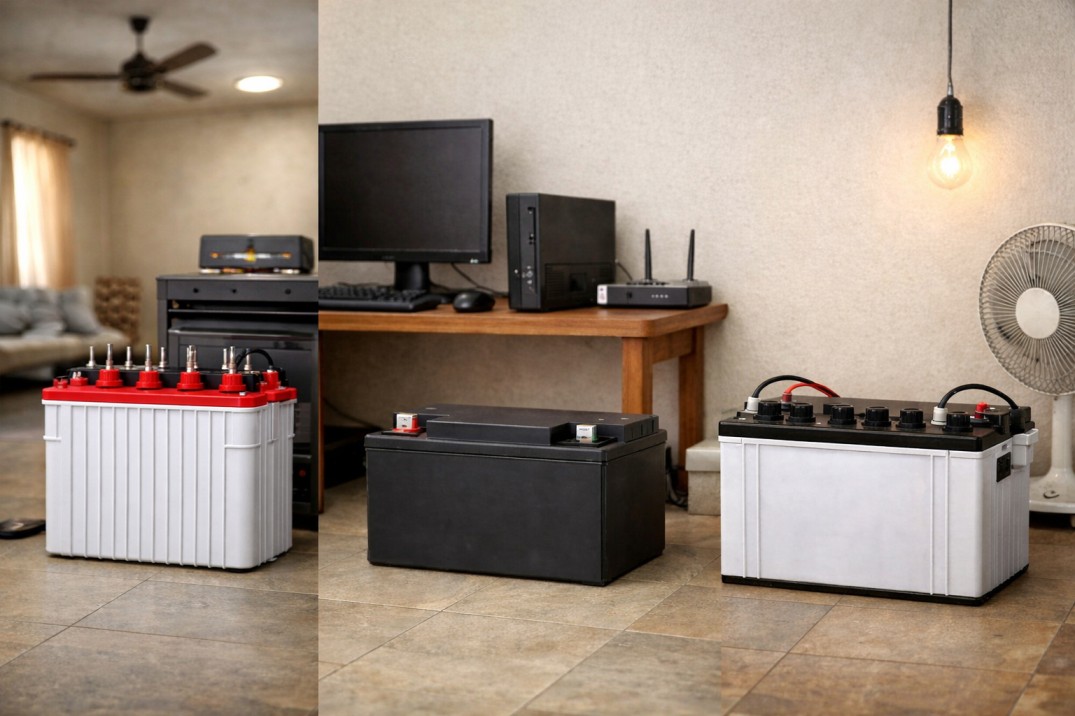
Inverter battery performance does not depend only on capacity or brand name. It depends heavily on how the battery is built internally. Among all internal components, inverter battery plate design plays the most decisive role in determining backup duration, charging efficiency, and overall lifespan. Many users overlook this aspect. However, experienced manufacturers and battery manufacturer dealers in UP understand that plate construction directly affects how a battery behaves under real Indian power conditions.
At Sarex Batteries, plate engineering remains a core focus because it defines long-term reliability.
In this blog, lets us breakdown how How Battery Plate Design Impacts Inverter Battery Life & Performance
Understanding the Role of Battery Plates in Inverter Systems
Battery plates store and release energy during every charge and discharge cycle. Each time a power cut occurs, these plates handle chemical reactions that convert stored energy into usable power. Therefore, plate thickness, structure, and material quality directly influence performance consistency.
When plates lack structural strength, they degrade faster. As a result, backup time reduces and failure occurs earlier than expected. This reality makes plate design a key consideration for battery manufacturer dealers in UP advising customers on long-term battery selection.
Tubular Plate Design vs Flat Plate Design
Tubular batteries use positive plates enclosed in protective gauntlets. This design prevents active material from shedding during repeated deep discharges. Consequently, tubular batteries deliver a longer cycle life and stable performance.
Flat plate batteries, on the other hand, use pasted plates that expose active material directly. While this design reduces costs, it accelerates wear under frequent power cuts. Therefore, experienced battery manufacturer dealers in UP recommend tubular plate designs for areas with regular outages.
How Plate Thickness and Active Material Affect Lifespan
Thicker plates hold more active material and resist corrosion better. Because of this, they tolerate deeper discharge cycles without structural damage. Thin plates heat up faster and lose material during repeated charging.
High-quality active material further improves charge acceptance and reduces internal resistance. Sarex designs plates with balanced thickness and high-purity material to ensure performance stability across operating conditions commonly faced by battery manufacturer dealers in UP markets.
Heat Dissipation and Battery Plate Design Efficiency
Indian climates expose batteries to high ambient temperatures. Poor plate design traps heat, accelerating corrosion and water loss. Well-engineered plates allow heat to dissipate evenly, protecting internal chemistry.
As a result, batteries with superior plate construction perform more reliably during extended backup usage. This advantage becomes especially relevant for battery manufacturer dealers in UP serving residential and commercial customers facing voltage fluctuations.
Impact of Plate Design on Charging Speed and Power Delivery
Plate design also affects how quickly a battery charges and how consistently it delivers power. Robust plates accept charge uniformly and reduce energy loss. Weak plate structures struggle under fast charging and degrade prematurely.
Sarex optimizes plate geometry to support efficient charging without stressing internal components, ensuring dependable performance for end users and long-term satisfaction for battery manufacturer dealers in UP.
Why Plate Design Matters When Choosing Sarex Batteries
Battery performance issues often trace back to internal design choices rather than usage mistakes. Based on field performance data collected from residential and commercial installations across North India Sarex focuses on plate engineering because it determines reliability, safety, and service life.
This approach allows dealers and customers to invest confidently in batteries built for real operating conditions. This design approach is based on field performance data observed across multiple operating conditions in North India.
Conclusion
Battery plate design directly influences inverter battery life, charging behavior, and overall performance. Tubular construction, optimal thickness, and high-quality active material ensure durability under frequent power cuts
For buyers and battery manufacturer dealers in UP, understanding plate design enables better decisions and long-term value. With its engineering-driven approach, Sarex delivers batteries designed to perform consistently, not just look good on specifications.
To understand how plate engineering impacts real-world performance, explore Sarex inverter batteries at https://sarexindia.com/
FAQs
Q1. Why is battery plate design important for inverter batteries?
Because plates handle energy storage and release during every charge cycle.
Q2. Do thicker plates improve inverter battery performance?
Yes, thicker plates resist corrosion and improve lifespan.
Q3. How does Sarex ensure consistent plate quality?
Sarex uses controlled manufacturing processes and material purity checks to maintain plate performance consistency.— check now